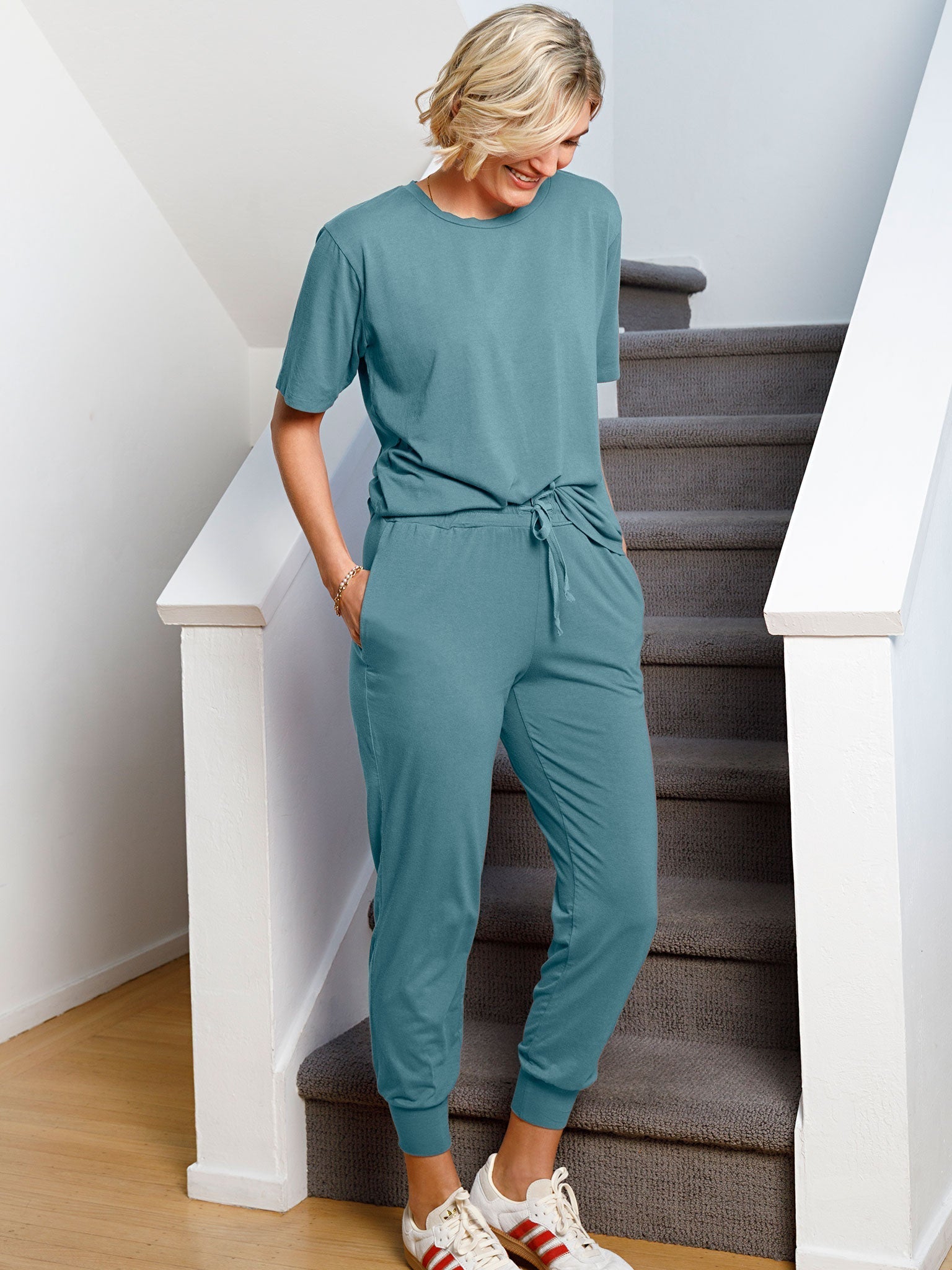

Why American-Made Clothing Is Often the More Sustainable Choice
When shopping for clothing, it's easy to focus on style, color, or fit. But have you ever stopped to think about where your clothes were made—and why it matters?
The country where a garment is manufactured can significantly affect its environmental footprint, the people who make it, and even how long it lasts.
While no manufacturing process is completely without impact, choosing American-made clothing can be an important step toward building a more sustainable wardrobe. From shorter transportation distances to greater supply chain transparency, domestically made garments often align with the values of quality, longevity, and thoughtful consumption.
At Blue Canoe, we believe sustainability is about more than the fabrics we choose. It's also about how our clothing is made, where it's made, and how we create pieces you'll love wearing for years.
Why Manufacturing Location Matters
Today's fashion industry is more global than ever. Many garments travel thousands of miles before they reach your closet. Cotton may be grown in one country, spun into yarn in another, sewn into clothing somewhere else, and finally shipped across oceans before arriving in stores.
Each step requires transportation, energy, and resources. While global supply chains aren't inherently unsustainable, longer, more complex manufacturing networks often increase environmental impact and make it harder for brands and consumers to understand exactly how products are made.
Choosing clothing made closer to home can help simplify that journey.
1. Reduced Transportation Can Lower Environmental Impact
One of the biggest sustainability benefits of American-made clothing is shorter transportation distances. When garments are manufactured overseas, they often travel by cargo ship, truck, rail, and air before reaching customers. Every stage of transportation contributes to greenhouse gas emissions.
Producing clothing domestically can reduce the distance products travel, helping to minimize transportation-related emissions and create a more streamlined supply chain. Although transportation is only one part of a garment's environmental footprint, choosing products made closer to where they're sold is one meaningful way to reduce unnecessary travel.
2. Greater Supply Chain Transparency
Knowing where your clothing comes from makes it easier to understand how it was produced. Domestic manufacturing often allows brands to build closer relationships with their production partners and maintain greater oversight throughout the manufacturing process.
That transparency benefits everyone. Consumers can make more informed purchasing decisions, while brands have more opportunities to ensure their products meet the quality and ethical standards they value.
At Blue Canoe, we believe understanding the journey from fiber to finished garment helps create greater appreciation for the clothing we wear every day. If you're curious about how sustainable clothing begins, learn more about the journey of organic cotton from farm to finished fabric.
3. Supporting Skilled American Manufacturing
Choosing American-made clothing also helps support skilled craftspeople, sewing professionals, and domestic manufacturing communities. The apparel industry has changed dramatically over the past several decades, with much of production moving overseas. Supporting companies that continue to manufacture in the United States helps preserve valuable craftsmanship and local jobs.
While sustainability often focuses on environmental responsibility, supporting thriving communities is also an important part of building a healthier future.
4. Quality That Lasts Longer
One of the most sustainable garments is often the one you already own. Clothing designed with quality construction and durable materials is more likely to stay in your wardrobe for years rather than seasons. American-made brands frequently emphasize thoughtful craftsmanship, careful construction, and timeless design over fast-changing trends. That philosophy fits naturally with slow fashion—the idea of buying fewer, better-made pieces instead of frequently replacing inexpensive garments. When clothing lasts longer, fewer resources are needed to replace it, helping reduce waste over time.
5. Ethical Production Matters
Sustainability isn't only about protecting the environment. It's also about supporting responsible business practices and respecting the people who make our clothing.
Many consumers choose American-made apparel because they appreciate the greater visibility into labor standards and workplace regulations that domestic manufacturing can provide.
While ethical manufacturing exists around the world, producing clothing closer to home can make it easier for brands to build long-term relationships with their manufacturing partners and maintain oversight throughout the production process. Choosing companies that value both people and the planet helps encourage a more responsible fashion industry.

Sustainability Starts With Better Materials
Where clothing is made is important—but so is what it's made from. Natural fibers like organic cotton, bamboo-derived fabrics, hemp, and linen often provide a lower-impact alternative to garments made primarily from petroleum-based synthetic materials.
At Blue Canoe, we prioritize organically grown cotton because it's naturally soft, breathable, durable, and comfortable for everyday life. Combining thoughtfully sourced natural fibers with responsible manufacturing creates clothing that's designed to last—and designed to be worn often.
Why Slow Fashion and American Manufacturing Go Hand in Hand
Fast fashion encourages consumers to buy more clothing at lower prices, often at the expense of quality and longevity.
A more sustainable approach focuses on:
- Buying fewer, higher-quality pieces
- Choosing timeless styles over short-lived trends
- Investing in clothing made to last
- Supporting responsible manufacturing
- Building a versatile wardrobe you'll wear again and again
American-made clothing often complements this mindset because it emphasizes craftsmanship, durability, and intentional production rather than rapid mass manufacturing.
When every piece earns its place in your closet, your wardrobe becomes simpler, more functional, and more sustainable.
Small Choices Create Meaningful Change
Building a sustainable wardrobe doesn't require replacing everything you own overnight. Instead, it's about making thoughtful choices over time.
When shopping for new clothing, consider asking a few simple questions:
- Where was this garment made?
- What materials were used?
- Will I wear it often?
- Is it made to last?
- Does it fit my values as well as my lifestyle?
These small decisions add up, helping create a wardrobe that's more intentional and more rewarding to wear.
Why Blue Canoe Chooses a Thoughtful Approach
At Blue Canoe, sustainability has always been about looking at the whole picture.
We believe comfortable clothing begins with thoughtfully selected natural fibers, timeless designs, and manufacturing practices that reflect our values. By creating versatile pieces you'll reach for season after season, we encourage a slower, more intentional approach to fashion.
Our goal isn't simply to make clothing—it's to make clothing that feels good, lasts beautifully, and supports a more mindful way of living.
Choosing Clothing That Makes a Difference
Every purchase is an opportunity to support the kind of fashion industry you want to see.
Choosing American-made clothing, investing in natural fibers, and embracing timeless design are all meaningful ways to reduce waste, support responsible manufacturing, and build a wardrobe that lasts.
No single decision will change the fashion industry overnight, but together, thoughtful choices can have a lasting impact.
When you choose quality over quantity and craftsmanship over convenience, you're investing in clothing that's better for your closet—and a more sustainable future.