
How to Read a Clothing Label: Fiber Content, Country of Origin, and the Claims That Matter
When you shop for clothing, it is easy to focus on color, cut, and fit. But one of the most useful parts of a garment is often the smallest: the label.
That little piece of fabric can help you understand what the garment is made from, where it was made, and how to care for it. It can also help you look beyond broad words such as “natural,” “eco-friendly,” or “soft” and compare what you are actually buying.
You do not need to be a textile expert to make sense of it. Once you know what to look for, reading a clothing label takes less than a minute—and it can help you choose pieces that better fit your skin, your lifestyle, and your values.
What Should a Clothing Label Tell You?
In the United States, federal rules require most textile products to identify their fiber content, country of origin, and the manufacturer or another business responsible for the product. Manufacturers and importers must also provide care instructions.1
That gives you three practical questions to ask before buying:
|
Label question |
What it helps you understand |
|
What is it made from? |
The garment’s fibers, proportions, feel, stretch, and likely performance |
|
Where was it made? |
The country in which the garment was manufactured or processed |
|
How should I care for it? |
Whether the piece suits the way you realistically wash, dry, and store clothing |
The front of a product page or hangtag may tell a beautiful story. The label gives you the details behind that story.
Start With Fiber Content—not the Biggest Word on the Hangtag
The first thing to find is the fiber-content line. It should list the fibers in the garment and their percentages.
If a label says 100% cotton, the fabric is made entirely from cotton fiber. If it says 87% cotton and 13% spandex, it is a blend. Neither description tells you everything about quality, but both tell you what is present and in what proportion.
Percentages matter because a garment marketed as “cotton” may still contain a meaningful amount of another fiber. That second fiber can change how the garment stretches, holds its shape, dries, and feels against the skin.
For readers who want the simplest possible composition, Blue Canoe’s 100% organic cotton collection is an easy place to begin. The Cotton Adjustable Bra, for example, uses a fine-knit baby-rib body made from 100% organically grown cotton, with separate non-latex strap and edging components described on the product page.
That last detail is important: the main fabric and the findings—such as straps, elastic, buttons, lace, or thread—may not always be made from the same material. If you are avoiding a particular fiber or have a specific sensitivity, read the complete product description rather than relying on the largest phrase in the headline.
What Does a Fabric Blend Mean?
A blend is not automatically a bad thing. The better question is: What does each fiber contribute, and does that function matter for this garment?
A loose sleep top and a fitted legging ask very different things from fabric. A sleep top may work beautifully in a lightweight 100% cotton knit. A legging needs enough recovery to move, fit closely, and return to its original shape.
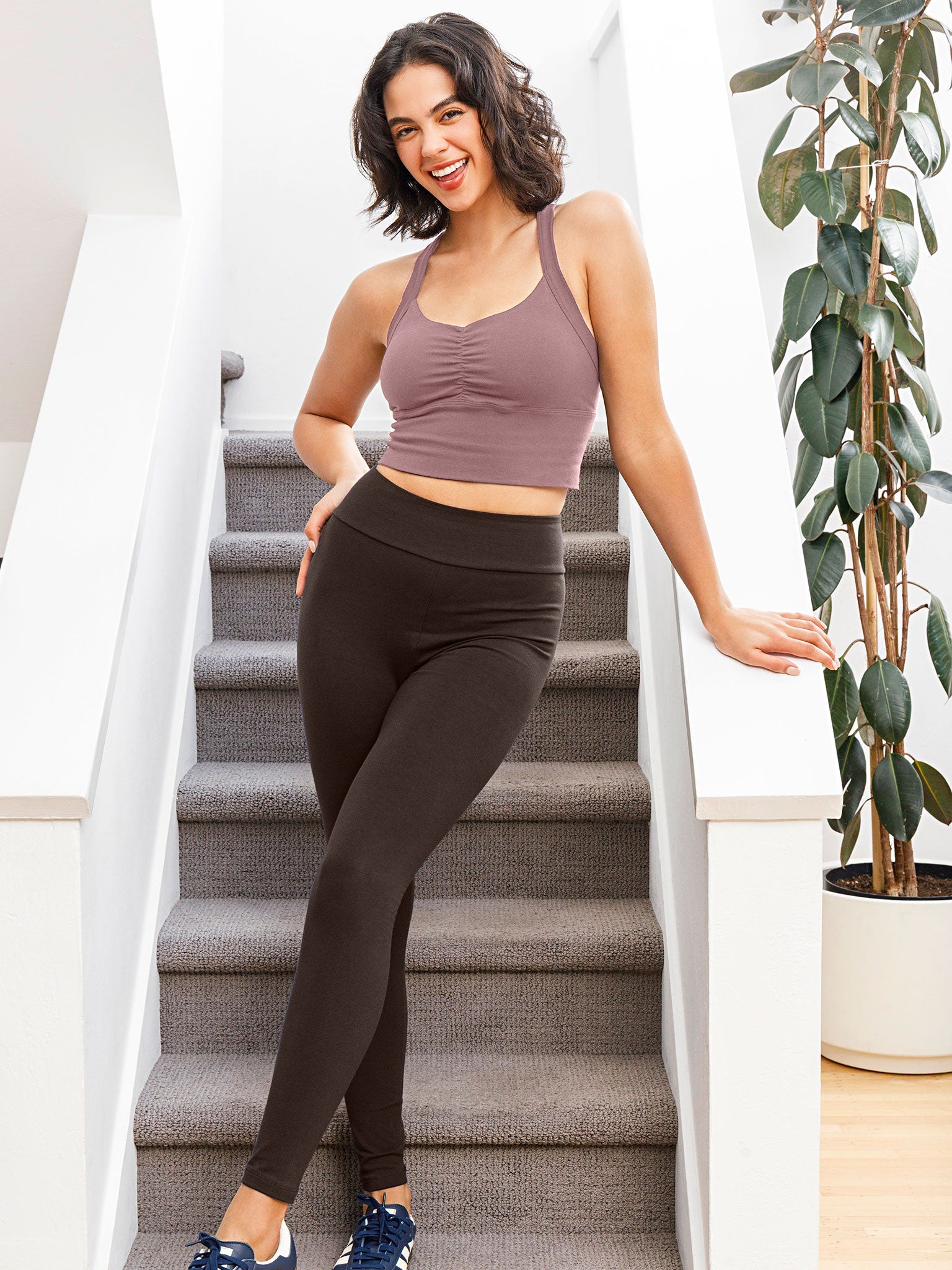
Blue Canoe’s High Waist Legging offers a clear example. Its fabric is listed as 87% organically grown cotton and 13% spandex. The cotton provides the majority of the fabric, while the spandex supplies stretch and shape retention for a fitted style.
If you would like to understand that choice in more detail, read Why We Use Spandex in Some of Our Fabrics. The article explains why a small or moderate percentage of stretch fiber can help bras, leggings, and fitted tops move comfortably without quickly becoming baggy.
When you see a blend, ask whether it is serving a clear purpose. A useful blend should help the garment do its job—not simply make a natural-sounding marketing phrase appear more prominent.
“Organic Cotton” and “Cotton” Are Related—but Not Identical Claims
The fiber-content line tells you what fibers are in the garment. The word “organic” describes how the cotton was grown and documented.
That means two garments can both be labeled cotton while coming from very different agricultural systems. If this distinction is new to you, our guide to organic cotton versus conventional cotton explains the broader farming and environmental context.
It is also worth remembering that vague words are not the same as specific information. “Natural,” “green,” “conscious,” and “earth-friendly” may express an intention, but they do not replace fiber percentages, origin details, or clear information about how a product was made. Our article on five common myths about organic clothing offers a useful companion when you are sorting facts from assumptions.
A trustworthy product description should make it easy to connect the broad claim with concrete details.
Look Closely at Plant-Based Fabric Names
Cotton, linen, and hemp are familiar plant fibers. Other plant-based fabrics require one more step of interpretation.
For example, bamboo may be the original plant source, while the finished textile is a manufactured cellulosic fiber. Depending on the process and legal labeling, the fiber-content line may identify it as rayon or viscose made from bamboo. The important lesson is not to distrust unfamiliar terms. It is to compare the appealing front-of-package language with the complete fiber description.
If a garment is promoted as plant-based, look for answers to these questions:
|
Check |
Why it matters |
|
Is the exact fiber name shown? |
It clarifies what the finished fabric actually is |
|
Are percentages listed? |
It reveals whether the featured fiber is the whole fabric or part of a blend |
|
Is the processing or sourcing explained? |
It helps you evaluate claims beyond the raw plant source |
|
Are stretch fibers or other components disclosed? |
It gives a more realistic picture of feel and performance |
Clarity is more valuable than a perfect-sounding buzzword.
Check the Country of Origin
The country-of-origin line tells you where the garment was manufactured or processed. It does not, by itself, explain every step in the supply chain, but it gives you an important starting point.
If local production, labor standards, transportation, or manufacturing transparency matters to you, do not stop at the flag or slogan. Look for a brand that explains what “made here” means in practice.
Blue Canoe designs and sews its garments in the United States. To learn why that production choice matters to the company, read Why American-Made Clothing Is Often the More Sustainable Choice.
Do Not Skip the Care Label
The care label is not an afterthought. It tells you what the garment needs in order to stay wearable.
Before buying, consider whether those instructions fit your real routine. Will you hand-wash a bra? Are you comfortable line-drying a favorite top? Does the garment require a temperature or treatment you are unlikely to follow?
Care compatibility is part of value. A piece you can maintain properly is more likely to hold its shape, color, and comfort over time. If you want to make your wash routine gentler on both clothing and resources, visit How to Start a Sustainable Laundry Routine.
Blue Canoe product pages include fabric and washing details so you can review them before purchasing. When browsing organic cotton tops or women’s bottoms, compare not only style and color but also fabric weight, fiber percentages, fit notes, and recommended care.
A Five-Question Clothing Label Checklist
The next time you shop in a store or online, use this quick check:
|
Question |
What to look for |
|
1. What are the exact fibers? |
Read every fiber name, not only the headline material |
|
2. What are the percentages? |
Notice whether the garment is pure or blended |
|
3. What does each fiber do? |
Consider softness, breathability, stretch, structure, and shape retention |
|
4. Where was it made? |
Look for origin information and any supporting production details |
|
5. Can I care for it properly? |
Make sure the washing and drying instructions fit your routine |
These five questions will not tell you whether a garment is perfect. They will help you make a more informed choice—and that is a much better place to start than a vague claim on a hangtag.
Better Information Leads to Better Choices
Reading a clothing label is a small habit with a lasting payoff. It helps you understand what will touch your skin, how a piece is designed to perform, and what it will ask of you over time.
At Blue Canoe, we believe comfort begins with thoughtful fabric choices and clear information. Whether you are looking for the purity of 100% organic cotton or a carefully chosen cotton blend that adds stretch where it is needed, the goal is the same: clothing that feels good, works well, and earns a lasting place in your wardrobe.
Take a moment to read the details. Your label has more to say than you might think.